
Aids for Elderly & Enhancing Aged Care Safety
When discussing “aids for elderly,” we are referring to a crucial ecosystem of technologies designed to support older adults within professional care settings. These tools are fundamental to enhancing resident safety, promoting independence where appropriate, and optimising daily care routines.
This can range from simple mobility supports to sophisticated fall detection devices Australia-wide and fully integrated nurse call systems. Each component plays a vital role in the framework of modern aged care delivery.
Why Modern Patient Safety Technologies Are No Longer Optional
The landscape of aged care in Australia is undergoing a significant transformation. A rapidly ageing population, coupled with higher expectations for quality of life, means that what was once considered an optional extra is now an essential requirement for delivering safe, dignified, and compliant care.
For facility owners and aged-care managers, this is not merely about installing new gadgets. It’s a strategic imperative. The focus must shift from basic amenities to the thoughtful implementation of technology that addresses the core challenge of modern care: balancing a resident’s autonomy with their non-negotiable safety.
This guide will walk you through the essential categories of patient safety technology available today. We will cover everything from innovative fall prevention tools like wireless sensor mats to the communicative lifelines of modern hospital nurse call bell systems. The aim is to provide the knowledge needed to make informed procurement decisions—ones that benefit residents, empower staff, and maintain your facility’s reputation for excellence.
The Driving Force Behind New Technology
This push for superior technology is not a trend; it’s a direct response to clear demographic shifts and their implications for aged care. As more Australians require specialised care, the pressure on facilities to operate efficiently and safely has intensified.
The image below illustrates how these modern aids are integrated into today’s care environments.
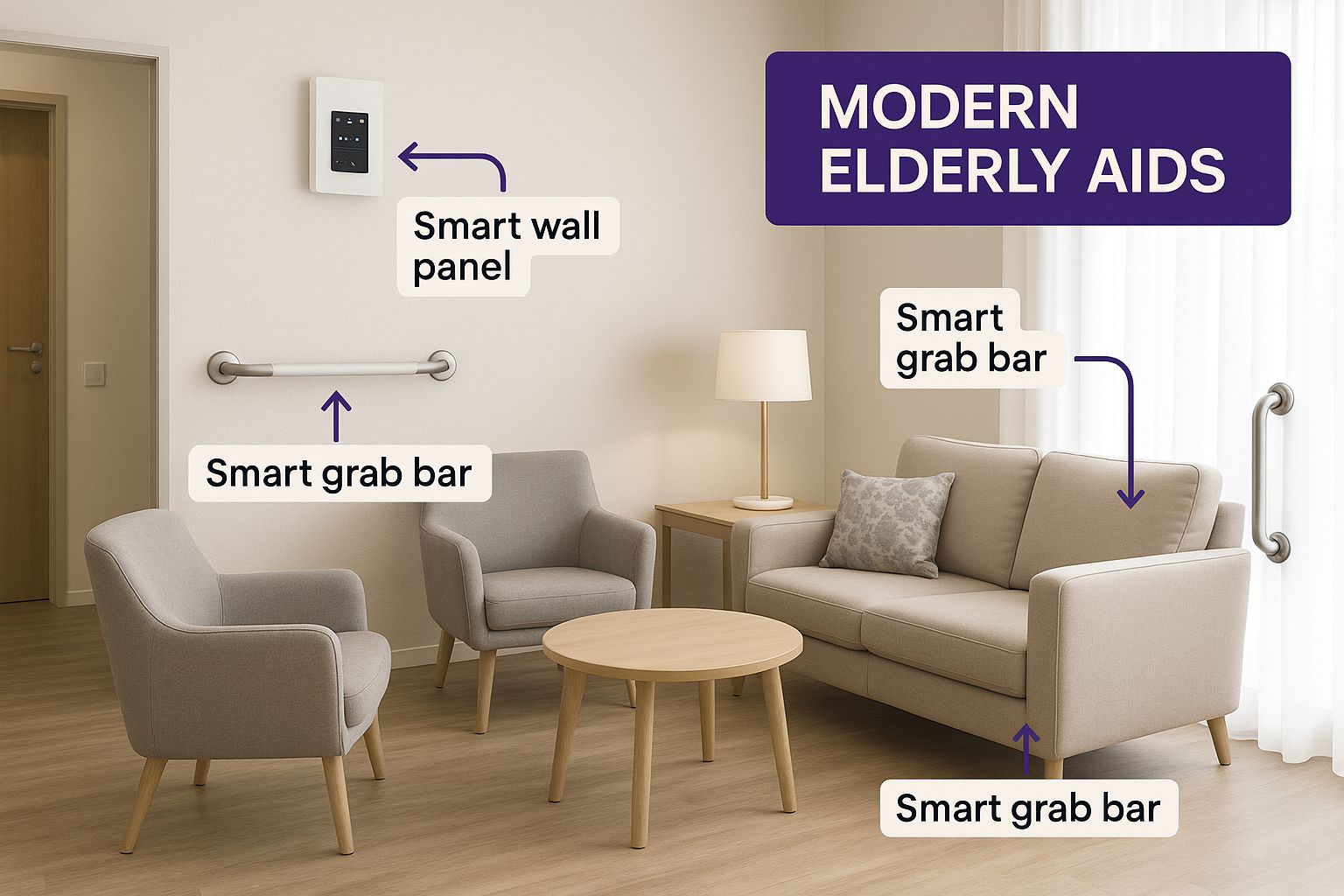
As you can see, assistive devices are no longer standalone items. They form part of a connected ecosystem designed to create a comprehensive safety net within a facility.
A Growing Need Evidenced by Data
The data paints a clear picture of an increasing reliance on structured care. Between 1999 and 2023, the number of permanent residents in Australian aged care facilities rose from 132,420 to 185,127—a 39.9% increase.
This surge reflects not only a larger elderly population but also an increase in frailty and complex health conditions that demand robust support systems.
By understanding these trends, aged-care managers can anticipate future needs and invest in technologies that offer proactive, rather than reactive, support. This proactive approach is a hallmark of excellence in care today.
Ultimately, investing in the right aids is a necessity for any provider committed to delivering top-tier care. These systems give residents the confidence to live more freely while providing staff with the tools they need to respond quickly and effectively. As a specialist supplier, Horizon, trading as Indigo Care provides reliable, Australian-compliant nurse call and monitoring products engineered to meet these exact challenges.
Proactive Fall Prevention and Monitoring Technology
While mobility aids are essential, a comprehensive safety strategy must account for moments of high vulnerability—such as a resident getting out of bed at night or moving unsupervised. Falls are a primary risk in aged care, often leading to serious injuries, a loss of confidence, and a significant decline in health.
A reactive strategy—waiting for a resident to call for help—is no longer sufficient. Modern aged care demands a proactive approach that identifies risk before an incident occurs.
This is where advanced monitoring technologies excel. These systems function as a silent, ever-watchful safety net, alerting staff to potential fall risks the moment they arise. Instead of responding to an emergency, carers receive a pre-emptive alert about a precursor event, such as a high-risk resident attempting to leave their bed unaided. This early warning shifts care from reaction to prevention, forming the first line of defence in any robust fall management plan.
The Role of Sensor-Based Alarms: Aids for Elderly
At the core of proactive fall prevention are sensor-based alarms, particularly bed alarms and wireless sensor mats. These are not simply noisemakers; they are intelligent monitoring tools for residents who may be unable to call for help due to cognitive decline or physical limitations.
They operate on a simple yet effective principle: detecting changes in pressure or position that signal a resident is moving into a potentially unsafe situation.
For instance, a sensor pad placed under the mattress can trigger an alert to the nurse call system the moment a resident’s weight shifts off it. This provides staff a critical window to reach the room and offer assistance before the resident is fully out of bed and at risk of falling.
Comparing Key Monitoring Technologies
Different devices share the same goal but utilise distinct technologies for specific scenarios. For aged-care managers, understanding these differences is crucial for architecting a tailored safety solution.
- Pressure-Based Sensors: Found in bed and chair pads, as well as floor mats. They detect the presence or absence of weight. When a resident sits up, leaves their chair, or steps onto a floor mat, the change in pressure sends an instant alert to caregivers. You can learn more about how to minimise fall risks with wireless floor sensor mats in our detailed guide.
- Infrared (IR) and Motion Sensors: Often integrated into advanced fall detection devices Australia, these sensors monitor movement within a room or zone. An IR beam across a doorway, for example, can send an alert if a resident known for wandering breaks the beam at night. They provide an excellent, non-intrusive method for monitoring exits.
These systems are designed for discreet yet effective oversight, providing continuous monitoring without compromising a resident’s privacy or dignity.
A layered approach is often the most effective. Combining a pressure-sensitive bed alarm with a wireless floor mat creates multiple alert triggers, significantly increasing the likelihood that staff can respond before a fall happens.
Creating a Comprehensive Safety Net with the Best Fall Detections Devices Australia
The true power of these technologies is realised when they are integrated into a facility-wide communication network. A standalone bed alarm is helpful, but one that connects directly to the central hospital nurse call bell system and sends alerts to staff’s mobile devices is a game-changer. This integration ensures the right person receives the right alert in real-time, regardless of their location.
By layering these technologies, aged care facilities can build a custom safety net for each individual. A resident with good mobility might only require a standard call button. In contrast, a resident with dementia and a history of falls could benefit from a bed alarm, a floor mat, and a personal fall detection pendant.
This ability to tailor solutions is what elevates care from standard to exceptional. As a specialist supplier, Horizon & Indigo Care provide a range of Australian-compliant monitoring products designed to integrate seamlessly and build this essential layer of protection.
The Evolution of Nurse Call Systems & Aids for Eldery in Aged Care
The humble call bell has evolved from a simple corded button into the central nervous system of a modern aged care facility. Today’s advanced nurse call systems are fully integrated communication hubs, critical for both resident safety and operational efficiency.
The leap is comparable to moving from a rotary phone to a smartphone. One makes a call; the other connects you to an entire ecosystem of information, coordination, and data. Similarly, modern nurse call systems Australia-wide link residents, carers, and management into one seamless, responsive network.
This shift is fundamental to providing high-quality care. A rapid, reliable response can be the difference between a minor assist and a major incident. It gives residents confidence and provides staff with the tools they need to be effective.
Core Components of a Modern System
A state-of-the-art nurse call system in Australia is composed of several key components working in harmony. Each element is designed for reliability, intuitive use, and clear communication, ensuring no call for help goes unanswered.
- Bedside Call Points: The most direct link between a resident and care staff. Modern call points are more than just buttons; they are ergonomically designed, easy to actuate, and often feature a “call reassurance” light so residents know their signal was received.
- Mobile Duress Alarms: Staff safety is paramount. These wearable devices allow carers to summon immediate assistance if they face a difficult or unsafe situation, regardless of their location in the facility.
- Pendants and Wearables: These devices grant residents freedom of movement while remaining connected to the call system. A simple press of a waterproof pendant can alert staff, whether the resident is in their room, a common area, or the garden.
By integrating these elements, a facility creates a comprehensive communication blanket that covers every corner, protecting everyone within.
More Than Just Alerts: Data and Compliance
While the primary function of a hospital nurse call bell is to alert staff, the true power of a modern system lies in its software. The centralised monitoring platform does much more than route calls—it collects a wealth of actionable data.
This data is invaluable for aged care managers. It provides a clear, auditable record of every call: who called, when they called, and how quickly staff responded. This information is critical for optimising facility operations.
For example, response time reports can highlight potential staffing gaps during specific shifts or in certain wings. This allows management to adjust rosters based on empirical data rather than guesswork, leading to improved care and smarter resource allocation.
These detailed logs are also essential for demonstrating compliance with Australian aged care quality standards. In an audit, the ability to present concrete data on responsiveness is a powerful testament to operational excellence. The system becomes an automated record-keeper, simplifying administration. For facilities that prioritise reliability, it’s worth exploring the benefits detailed in our guide on why wired nurse call and alarm systems are a must-have for healthcare facilities.
An Investment in Quality of Care
A robust nurse call system is not an expense; it is a critical investment in resident well-being and operational integrity. A reliable system ensures help arrives quickly, which is paramount in an emergency. It also reduces resident anxiety, as they feel secure knowing assistance is always a button-press away.
For staff, an integrated system reduces alarm fatigue by routing alerts to the appropriate carer and providing context for the call. This intelligent routing improves workflow and allows caregivers to spend more quality time on direct resident care.
Horizon & Indigo Care specialise in supplying reliable, Australian-compliant nurse call systems that form the backbone of safe and efficient aged care. By focusing on rapid response, data-driven insights, and unwavering reliability, we provide the tools that empower facilities to deliver the highest standard of care.
Supporting Independence With Home Care Technology
As Australia’s aged care model evolves, there is a growing emphasis on enabling seniors to live safely and independently in their own homes. For most older Australians, “ageing in place” is about maintaining autonomy, community connections, and the comfort of familiar surroundings. This desire for independence is driving the need for intelligent, user-friendly home care technologies that serve as a reliable safety net.
These aids bridge the gap between independent living and the need for occasional support, giving families and home care package managers peace of mind. From personal alarms to connected smart devices, this technology is a key enabler of a safe and secure home environment.
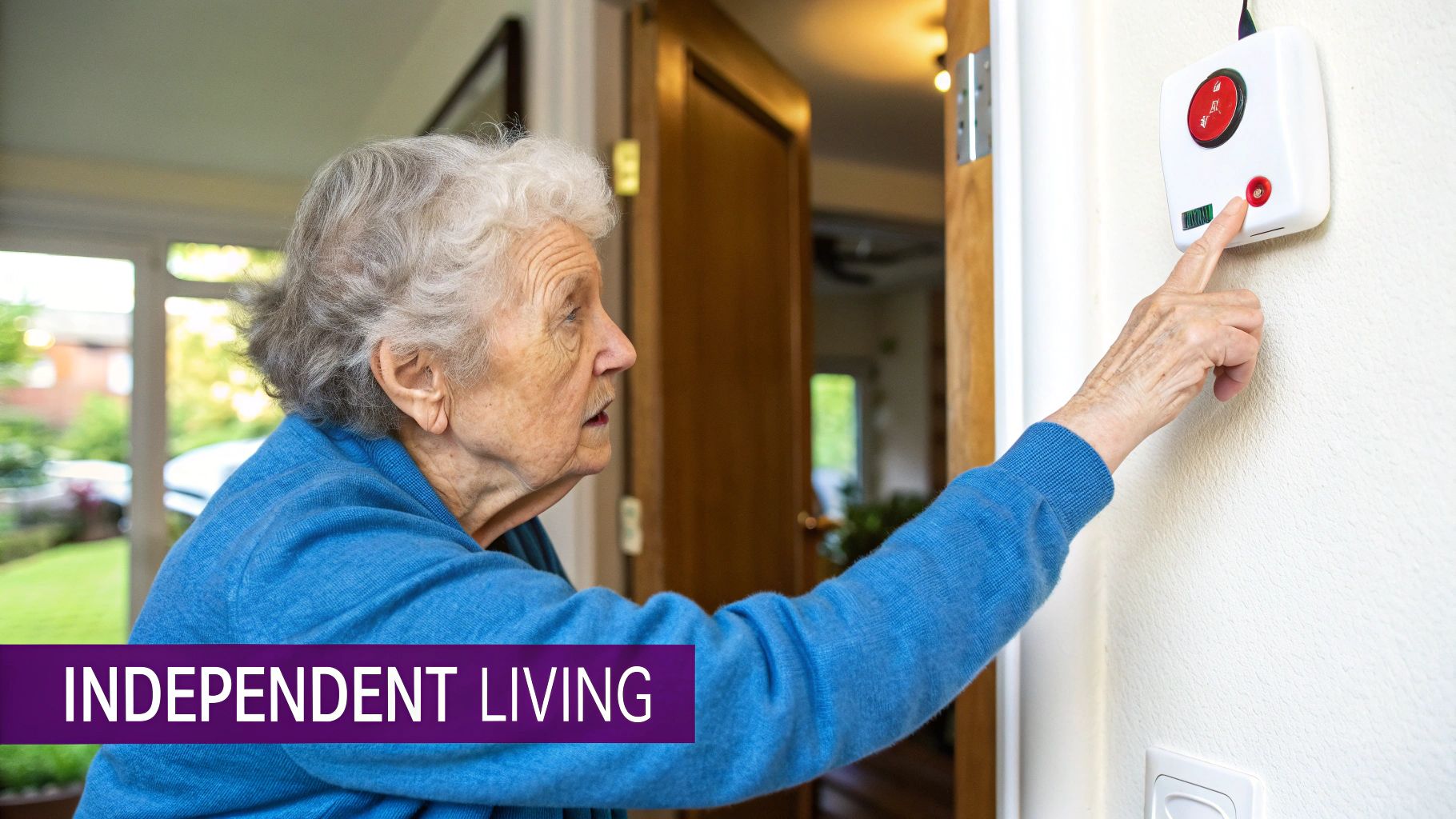
This trend is a direct response to Australia’s home care statistics. As of 2023, there were over 4.4 million Australians aged 65 and older. With a significant majority preferring to receive care at home, the demand for effective support technology has never been higher.
Key Technologies for Ageing in Place: Aids for Elderly
Effective support for seniors at home often involves a combination of technologies. Each device serves a specific function, and together they create a comprehensive, non-intrusive support system.
Essential aids include:
- Personal Emergency Response Systems (PERS): Commonly known as medical alert pendants or bracelets, these devices are a cornerstone of home safety. A simple button press connects the user to a 24/7 monitoring centre or a family member, ensuring an immediate response during an emergency like a fall or sudden illness.
- Telehealth and Remote Monitoring: These tools are transformative for managing health from home, allowing healthcare professionals to monitor vital signs like blood pressure or glucose levels remotely. This is crucial for managing chronic conditions and enabling timely medical intervention.
- Adapted Smart Home Devices: Everyday smart technology can be adapted to enhance safety. This includes automated lighting to prevent night-time trips, smart smoke detectors that send alerts to family members’ phones, and video doorbells for secure entry management.
The goal is to thoughtfully integrate these aids to create a safety ecosystem tailored to the individual. Technology does not replace human connection; it enhances it by building a foundation of security that supports true independence.
Practical Benefits for Seniors and Families: Aids for Elderly
The implementation of home care technology yields tangible benefits. For the individual, these devices foster confidence to continue daily routines without constant anxiety. For families, the peace of mind knowing their loved one is protected is invaluable.
Consider a fall detection device, for example. It can automatically summon help even if the user is unconscious and unable to press a PERS button. Simple monitoring tools, such as those for wheelchair safety, can alert caregivers to potential risks. Learn more in our article on monitoring wheelchair use at home.
Ultimately, these technologies empower seniors to live on their own terms for longer, directly improving their quality of life.
How to Choose and Implement the Right Technology
Selecting the right aids for elderly residents is a strategic decision that impacts care quality, staff workload, and operational budgets. To ensure a successful outcome, managers must look beyond features and adopt a practical framework that balances immediate needs with long-term goals.
The process begins with a comprehensive understanding of your facility’s unique environment. A thorough needs assessment is the essential first step, preventing a one-size-fits-all approach. This evaluation helps build a customised technology stack that addresses the specific risks and requirements of your resident population, ensuring every dollar invested delivers maximum value.
Starting With a Resident Needs Assessment: Aids for Elderly
Before selecting any tools, you must understand the cohort of residents who will use these aids for elderly. A resident needs assessment involves analysing the specific health profiles, mobility levels, and cognitive abilities within your facility. This step prevents over-investment in complex systems for low-need residents or, more critically, under-equipping those at high risk.
Key questions to guide your assessment:
- What is the prevalence of high fall-risk residents in each wing?
- How many residents have cognitive impairments that may prevent them from using a standard call bell?
- Are there specific times of day, such as overnight shifts, when monitoring needs are highest?
- Which residents require passive monitoring (e.g., bed alarms) versus active call systems?
The answers provide a detailed map of your facility’s needs. This data-driven approach allows for effective resource allocation, matching devices like wireless sensor mats and fall detection devices to the individuals who need them most.
Key Criteria for Technology Selection
With a clear picture of your residents’ needs, you can begin evaluating suppliers and systems. The Australian aged care market and aids for elderly are increasingly turning to technology to manage operational complexities and enhance care, with funding often available through programs like the Home Care Package (HCP).
When choosing a provider, look for a partner, not just a vendor. A specialist supplier like Horizone will offer consultation and ongoing support, ensuring the technology aligns with your care model and complies with Australian standards.
The right technology must be reliable, compliant, and scalable. The focus should be on the entire ecosystem, including the device, its network integration, and the support behind it.
A clear checklist simplifies the decision-making process, helping you focus on what matters most for your residents and staff.
Technology Selection Checklist for Aged Care Managers
| Evaluation Criteria | Key Questions to Ask | Why It Matters |
|---|---|---|
| TGA Compliance | Is the device registered with the Therapeutic Goods Administration (TGA)? Can you provide the registration details? | Using non-compliant devices poses serious legal and safety risks. TGA approval is a non-negotiable benchmark for quality and safety in Australia. |
| System Reliability | What is the system’s uptime record? Is it a wired or wireless system, and what are the backup protocols if power or internet fails? | In aged care, system failure is not an option. A reliable nurse call system must function 24/7 to ensure resident safety is never compromised. |
| Integration & Scalability | Can this system integrate with our existing facility management software? Can we easily add more devices or expand to a new wing later? | A scalable system saves money and disruption in the long run. Seamless integration creates efficient workflows for staff and centralises important data. |
This checklist provides a solid foundation for evaluating any potential technology partner, ensuring you make a choice that supports your facility for years to come.
Ensuring Successful Adoption and Training
Finally, the most advanced technology is ineffective if staff are not confident using it. A successful rollout depends on comprehensive training and effective change management. Plan for hands-on training sessions that cover not just how to use the equipment, but also how to interpret alerts and respond appropriately.
This ensures your investment translates directly into better care outcomes and a safer environment for everyone.
Common Questions About Elderly Care Technology and Aids for Elderly
Navigating aged care technology can be complex. As a healthcare professional or facility manager, you are making decisions that impact compliance, workflows, and resident safety.
To provide clarity, we have compiled answers to the most frequently asked questions, helping you feel confident in upgrading your facility’s safety and communication systems.
What’s the Difference Between Active and Passive Monitoring Aids?
Understanding this distinction is key to designing an effective safety plan. Think of them as two different but complementary types of safety nets.
Active monitoring aids require a resident to perform an action to summon help. They are ideal for residents who are alert and capable of signalling for assistance.
- Examples: The classic hospital nurse call bell, a wearable alarm pendant, or a bedside call button.
- Best for: Residents who can recognise they need assistance and are physically able to press a button.
Passive monitoring aids operate automatically in the background without any action from the resident. These systems are designed to detect potential problems and send an alert. They are an essential safeguard for residents who may be unable to call for help due to confusion, memory loss, or physical incapacity.
- Examples: Wireless sensor mats, pressure-sensing bed alarms, or automatic fall detection devices.
- Best for: Residents with dementia, those at high risk of falling, or individuals who may wander.
The optimal safety strategy in any aged care facility involves layering both active and passive technologies. This creates a comprehensive system that adapts to the diverse and evolving needs of all residents.
How Important Is TGA Compliance for These Devices in Australia?
In Australia, TGA compliance is non-negotiable. The Therapeutic Goods Administration (TGA) is the national regulator, confirming that a medical device has been assessed for safety, quality, and performance.
Choosing a TGA-compliant device is an investment in technology that meets Australia’s stringent healthcare regulations. It is your assurance that equipment, from complex nurse call systems Australia-wide to a simple sensor mat, is reliable and fit for purpose.
Using non-compliant aids exposes your facility, staff, and residents to significant risk, including legal liability, non-compliance with care standards, and potential invalidation of insurance. Most importantly, it compromises the well-being of those in your care. Always request proof of TGA registration from a supplier before procurement.
Can New Nurse Call Systems Integrate With Our Existing Software?
Yes. In fact, robust integration capabilities are a hallmark of any modern nurse call system. Suppliers understand that aged care facilities rely on a suite of software for resident management, clinical records, and team communication. A new system should streamline operations, not add complexity.
High-quality systems are designed for flexible integration with:
- Facility Management Software
- Mobile Messaging and Paging Systems
- Clinical Information Systems (CIS)
- Building Management Systems (BMS) for functions like lighting and door access
This transforms a basic alert system into a powerful operational tool. For example, a bed alarm can trigger an alert sent directly to the assigned carer’s device, log the event in the central system, and update the resident’s file—all automatically. Before committing, discuss integration capabilities with the provider to ensure seamless compatibility with your existing software stack.
At Horizon, we specialise in reliable, TGA-compliant nurse call systems and fall prevention technologies built for the demands of Australian aged care. Our solutions are designed for easy integration and total reliability, so your team can deliver the highest standard of care.
Discover Australian-Compliant Nurse Call and Monitoring Products at Horizon